|
April
16, 2006 / Baramouda 09, 1722 AM
Start Holy Week |
16 أبريل 2006 /
09
برمودة
1722
بداية أسبوع الألام |
|
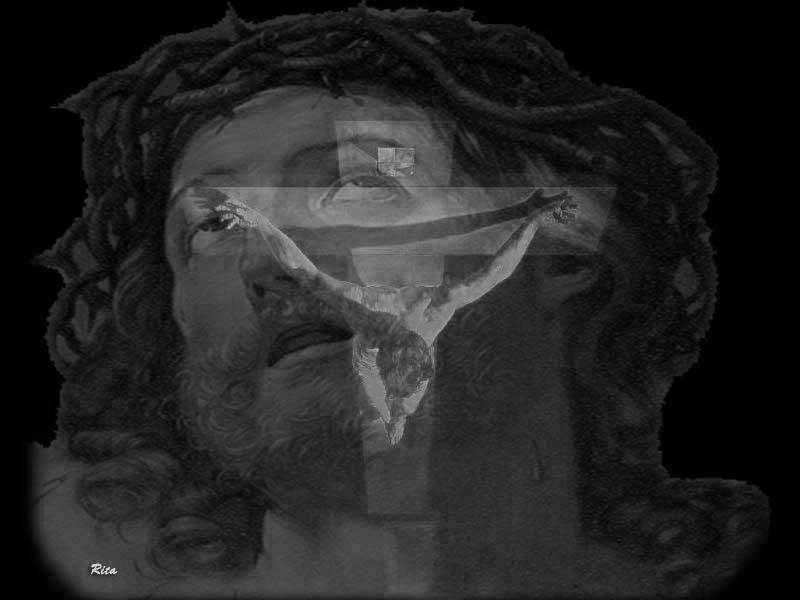
The Passion
Comprises the very
last week of Jesus' life on Earth.
It began on Palm
Sunday and concluded on the morning of Easter Sunday.
Saturday and Sunday
Christ’s last public ministry
outside of Jerusalem was probably primarily in Perea and Judea. A few days
before the final Passover, Jesus drew near to Jerusalem (John 11:55),
arriving at Bethlehem six days before the Passover (John 12:1), namely the
Saturday before the Passion Week. That evening, Jesus was anointed at
Simon the leper’s house (Matt. 26:6-13; Mark 14:3-9; John 12:1-8). On the
next day (Sunday), there was a great crowd that came to Bethany to see
Jesus (John 12:9-11).
Monday
The next day (John 12:12),
Monday, was Jesus’ triumphal entry into Jerusalem (Matt. 21:1-9; Mark
11:1-10; Luke 19:28-40; John 12:12-19), His visit to the temple (Matt.
21:10-11; Mark 11:11), and then His return to Bethany. The day of the
triumphal entry would be Nisan 10 when the lamb was selected for Passover.
Hence, the triumphal entry was the day when Christ presented Himself as
Israel’s Paschal lamb.
Tuesday
On Tuesday on the way from
Bethany to Jerusalem, Jesus cursed the fig tree (Matt. 21:18-19; Mark
11:12-14), and then He went to Jerusalem to cleanse the temple (Matt.
21:12-13; Mark 11:15-17; Luke 19:45-46). The religious leaders began to
seek how they might destroy Him that evening, and that evening Jesus left
Jerusalem, presumably returning to Bethany (Mark 11:18-19; Luke 19:47-48).
Wednesday
On the way to Jerusalem on
Wednesday, the disciples saw the withered fig tree (Matt. 21:20-22; Mark
11:20-26). At the temple in Jerusalem, Jesus had a day of controversy with
the religious leaders (Matt. 21:23—Matt. 23:39; Mark 11:27—Mark 12:44;
Luke 20:1—Luke 21:4). That afternoon Jesus went to the Mount of Olives and
delivered the Olivet Discourse (Matt. 24:1—Matt. 25:46; Mark 13:1-37; Luke
21:5-36). Two additional things occurred on that day: (1) Jesus predicted
that in two days He would be crucified at the time of the Passover (Matt.
26:1-5; Mark 14:1-2; Luke 22:1-2); and (2) Judas planned the betrayal of
Christ with the religious leaders (Matt. 26:14-16; Mark 14:10-11; Luke
22:3-6).
Thursday
On this day, He had His
disciples prepare the Passover lamb (Matt. 26:17-19; Mark 14:12-16; Luke
22:7-13), and Jesus and His disciples had their Passover meal in the Upper
Room (Matt. 26:20-30; Mark 14:17-26; Luke 22:14-30; John 13:1—John 14:31).
Leaving the Upper Room, Jesus had a discourse with His disciples and
offered an intercessory prayer in behalf of them (Matt. 26:30-35; Mark
14:26-31; Luke 22:31-39; John 15:1—John 18:1). They arrived at the Garden
of Gethsemane, and it is here where Jesus suffered in agony (Matt.
26:36-46; Mark 14:32-42; Luke 22:39-46; John 18:1). Later that night Jesus
was betrayed and arrested (Matt. 26:47-56; Mark 14:43-52; Luke 22:47-53;
John 18:2-12). During the rest of that night, Jesus was tried first by
Anna’s and later by Caiaphas with the religious leaders (Matt. 26:57-75;
Mark 14:53-72; Luke 22:54-65; John 18:13-27).
Friday
Early in the morning, the
Sanhedrin, Pilate, Herod Antipas, and Pilate tried Jesus again (Matt.
27:1-30; Mark 15:1-19; Luke 22:66—Luke 23:25; John 18:28—John 19:16).
Jesus was then led to the cross and crucified at 9: 00 a.m. and died at 3:
00 p.m. and was buried later that day (Matt. 27:31-60; Mark 15:20-46; Luke
23:26-54; John 19:16-42). Christ the Paschal Lamb (1 Cor. 5:7) died at the
time when the Israelites were sacrificing their Passover lambs.
Saturday
Jesus laid in the tomb during
the Sabbath, and the Pharisees secured Roman guards to keep watch of the
tomb (Matt. 27:61-66; Mark 15:47; Luke 23:55-56).
Sunday
Christ was resurrected from
the dead (Matt. 28:1-15; Mark 16:1-8 [9-13]; Luke 24:1-35). He is a type
of the offering of the Firstfruits, which was offered the day after the
Sabbath (Lev. 23:9-14; 1 Cor. 15:23). |


